
Greek New Year Traditions
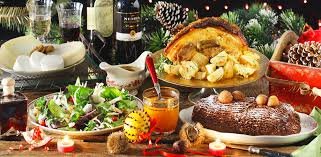 The traditional foods for the New Year celebrations in Greece include dishes that are shaped by timeless regional customs. There is no other celebration in the Greek calendar carrying such a deep symbolism since it’s associated with wishing for luck, prosperity, welfare, and happiness for the coming year. It’s the Greeks’ wish that all the supplies and ingredients for the New Year’s table are Greek in origin.
Flour will be mainly used to bake pastries and cook traditional desserts; such as fried delicacies in northern Greece, or fried lalaggia in Mani.

Lalaggia
Richness will be expressed on the table by means of wheat, wine, honey, chestnuts, oranges, and dried fruit. There will be an abundant use of winter vegetables, such as cauliflower or cabbage, to enrich the festive table even more.
As a main meat dish, pork remains the traditional choice of most families. The ‘Custom of the Gourd’, which spread all over Greece, required the slaughtering of a domestic pig on Christmas Eve, thus assuring a rich provision of meat during the holiday period, as well as for important celebrations during the rest of the year since most of the meat would be prepared with the intention of preserving it for months to come. The recipes included sausages but also entailed the use of curing, smoking, and even using gelatin, fat, etc. to preserve the meat.
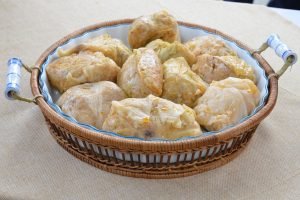
Yiaprakia
The New Year’s Eve table also includes yiaprakia, especially in northern Greece. Some sources state that this dish has clear Byzantine roots, while others say that the cabbage leaves of these stuffed rolls represent the clothes of Christ.
Other important elements at the New Year’s Eve table include Christopsomo, Vasilopita and the traditional sweets melomakarona and kourabiedes, which are savoured throughout the Christmas period.
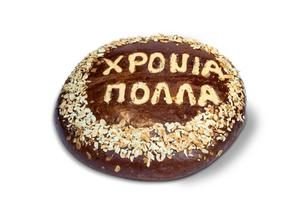
Vasilopita
While modern tradition associates Vasilopita with Saint Basil (Vasilopita translates as Basil Pita, although it is more like a cake), it has much older roots that go as far back as ancient Greece.
Vasilopita is a dish that the ancient Greeks prepared using fresh wheat, intended to honour Demeter, the goddess of agriculture. Historical accounts note that they would also prepare a special loaf of bread to be dedicated to the god Apollo at this time of year.
